Shuffle JSON 50 JSON CSV 50 CSV

Article samples were extracted from 2022-09-19, to 2023-02-26.

Date Downloaded
2022-09-30T00:00:00Z
URL
https://apnews.com/44cdbcedadeaaa32db3d27ce986984df
Headline
Farm laborer convicted in 2018 stabbing death of Iowa runner
Date Published
2021-05-28T18:30:12+00:00
Date Published Raw
2021-05-28T18:30:12Z
Date Modified
2021-05-28T21:59:43+00:00
Date Modified Raw
2021-05-28T21:59:43Z
Authors
    • Name: RYAN J. FOLEY
    • Name Raw: RYAN J. FOLEY
Language
en
Breadcrumbs
Main image
Description
IOWA CITY, Iowa (AP) — A farm laborer was found guilty Friday in the abduction and killing of an Iowa college student who vanished while out for a run in 2018 and will face life behind bars for a crime that shocked the nation.
Article Body
IOWA CITY, Iowa (AP) — A farm laborer was found guilty Friday in the abduction and killing of an Iowa college student who vanished while out for a run in 2018 and will face life behind bars for a crime that shocked the nation.

A 12-member jury unanimously found Cristhian Bahena Rivera guilty of first-degree murder in the attack on University of Iowa student Mollie Tibbetts, who was described as so kind and friendly that investigators could find no one who spoke badly about her.

Bahena Rivera, who came to the U.S. illegally from Mexico as a teenager, will be sentenced to life in prison without the possibility of parole. Judge Joel Yates ordered Bahena Rivera, who has been in custody since his August 2018 arrest, to be held without bond pending a July 15 sentencing hearing.

The verdict came after a two-week trial at the Scott County Courthouse in Davenport, in a case that fueled public anger against illegal immigration and concerns about random violence against women. The jury, which included nine white members and three of Hispanic, Latino or Spanish descent, deliberated for seven hours on Thursday and Friday.

“This was the verdict that the evidence demanded,” said one of the prosecutors, Poweshiek County Attorney Bart Klaver, who said such violent crime almost never happens in his county of 18,000 people.

Klaver said the verdict was an emotional moment for the family of Tibbetts, calling the outcome a “weight off of everyone’s shoulders.” Several of her relatives, including her mother, had watched the proceedings daily in a conference room across from the courtroom, where the public was banned due to COVID-19 protocols.

Bahena Rivera’s defense attorneys, Chad and Jennifer Frese, said they were disappointed in the verdict and would appeal. They said their client had consistently since 2018 told them the story he shared on the witness stand about two masked men that he claims were responsible, even though prosecutors had never previously heard that claim.

Jennifer Frese said that if the testimony had been coached by defense lawyers, “we would have come up with something better than that.”

“We can tell you that getting to know Cristhian Bahena, we are very surprised that he would be the kind of person that would commit a crime like this,” Chad Frese said. “He is nothing but a soft-spoken, respectful, kind person.”

They said they would renew their arguments that Bahena Rivera’s statements to police were coerced and should be suppressed, along with the discovery of Tibbetts’ body that followed.

Tibbetts, who ran track and cross country in high school, never returned home after going for a routine run in her hometown of Brooklyn, Iowa on the evening of July 18, 2018. She was reported missing the next day after she didn’t show up for her summer job at a daycare, where she was working after completing her freshman year. Tibbetts had hoped to one day become a child psychologist.

Her disappearance from the town of 1,700 was immediately deemed suspicious, and local, state and federal agencies joined hundreds of volunteers in a highly publicized search for her.

Investigators say they broke the case open nearly a month later after obtaining surveillance video from a homeowner that shows, for a split second, a shadowy figure that appears to be Tibbetts running in the distance. The video shows a black Chevy Malibu with chrome mirrors and door handles driving past 20 seconds later, and back and forth several times in the next 20 minutes.

A sheriff’s deputy spotted Bahena Rivera, who worked at a local dairy farm, driving the distinctive vehicle the next day. During a lengthy interrogation that began Aug. 20, 2018, Bahena Rivera said that he drove past Tibbetts while she was running and turned around to get another look because he found her attractive.

He eventually said that he approached Tibbetts and fought with her after she tried to get away and threatened to call police. He claimed that he then “blacked out” but remembered driving with her body in the trunk of his car. He led investigators in the early morning hours of Aug. 21 to a remote cornfield where they found her badly decomposed body hidden under corn stalks.

An autopsy found that Tibbetts died of sharp force injuries from several stab wounds to her head, neck and chest. DNA testing showed that her blood was found in the trunk of the Malibu, but investigators never found the murder weapon.

Prosecutor Scott Brown praised the investigators whose persistence helped solve the case, noting they faced criticism during the trial from the defense.

He said in a closing argument Thursday that Bahena Rivera killed Tibbetts out of anger after she rebuked him. He said Bahena Rivera also had a sexual motive, noting that Tibbetts was found partially naked with her legs spread when her body was found.

During dramatic testimony Wednesday that surprised prosecutors, the 26-year-old Bahena Rivera denied that he killed Tibbetts. He claimed publicly for the first time that two masked men took him at gunpoint from his trailer, forced him to drive as one of them killed Tibbetts on a rural road and directed him to a rural area where he left her body. Bahena Rivera said the men threatened to kill his ex-girlfriend and young daughter if he spoke out.

Bahena Rivera’s defense suggested one of the men may have been Tibbetts’ boyfriend, Dalton Jack, who admitted during hours of difficult testimony that he had an affair with another woman and past anger problems. But police said they cleared Jack, who had bought an engagement ring and planned to soon propose marriage to Tibbetts, after establishing that he was out of town for work when Tibbetts vanished.

Then-President Donald Trump, Iowa Gov. Kim Reynolds and other Republicans had cited the vicious crime ahead of the 2018 midterm elections to call for harsher policies to deter illegal immigration. But their efforts eventually stopped after Tibbetts’ parents said the slaying should not be used to advance a political agenda that Tibbetts would have opposed.

In a sign of how the case remains politicized, GOP U.S. Rep. Ashley Hinson of Iowa released a statement on Friday morning praising the guilty verdict as a just outcome, even though jurors were still deliberating at the time. Her staff quickly apologized for the error but re-released the statement after the verdict was announced.
Article Body Html

IOWA CITY, Iowa (AP) — A farm laborer was found guilty Friday in the abduction and killing of an Iowa college student who vanished while out for a run in 2018 and will face life behind bars for a crime that shocked the nation.

A 12-member jury unanimously found Cristhian Bahena Rivera guilty of first-degree murder in the attack on University of Iowa student Mollie Tibbetts, who was described as so kind and friendly that investigators could find no one who spoke badly about her.

Bahena Rivera, who came to the U.S. illegally from Mexico as a teenager, will be sentenced to life in prison without the possibility of parole. Judge Joel Yates ordered Bahena Rivera, who has been in custody since his August 2018 arrest, to be held without bond pending a July 15 sentencing hearing.

The verdict came after a two-week trial at the Scott County Courthouse in Davenport, in a case that fueled public anger against illegal immigration and concerns about random violence against women. The jury, which included nine white members and three of Hispanic, Latino or Spanish descent, deliberated for seven hours on Thursday and Friday.

“This was the verdict that the evidence demanded,” said one of the prosecutors, Poweshiek County Attorney Bart Klaver, who said such violent crime almost never happens in his county of 18,000 people.

Klaver said the verdict was an emotional moment for the family of Tibbetts, calling the outcome a “weight off of everyone’s shoulders.” Several of her relatives, including her mother, had watched the proceedings daily in a conference room across from the courtroom, where the public was banned due to COVID-19 protocols.

Bahena Rivera’s defense attorneys, Chad and Jennifer Frese, said they were disappointed in the verdict and would appeal. They said their client had consistently since 2018 told them the story he shared on the witness stand about two masked men that he claims were responsible, even though prosecutors had never previously heard that claim.

Jennifer Frese said that if the testimony had been coached by defense lawyers, “we would have come up with something better than that.”

“We can tell you that getting to know Cristhian Bahena, we are very surprised that he would be the kind of person that would commit a crime like this,” Chad Frese said. “He is nothing but a soft-spoken, respectful, kind person.”

They said they would renew their arguments that Bahena Rivera’s statements to police were coerced and should be suppressed, along with the discovery of Tibbetts’ body that followed.

Tibbetts, who ran track and cross country in high school, never returned home after going for a routine run in her hometown of Brooklyn, Iowa on the evening of July 18, 2018. She was reported missing the next day after she didn’t show up for her summer job at a daycare, where she was working after completing her freshman year. Tibbetts had hoped to one day become a child psychologist.

Her disappearance from the town of 1,700 was immediately deemed suspicious, and local, state and federal agencies joined hundreds of volunteers in a highly publicized search for her.

Investigators say they broke the case open nearly a month later after obtaining surveillance video from a homeowner that shows, for a split second, a shadowy figure that appears to be Tibbetts running in the distance. The video shows a black Chevy Malibu with chrome mirrors and door handles driving past 20 seconds later, and back and forth several times in the next 20 minutes.

A sheriff’s deputy spotted Bahena Rivera, who worked at a local dairy farm, driving the distinctive vehicle the next day. During a lengthy interrogation that began Aug. 20, 2018, Bahena Rivera said that he drove past Tibbetts while she was running and turned around to get another look because he found her attractive.

He eventually said that he approached Tibbetts and fought with her after she tried to get away and threatened to call police. He claimed that he then “blacked out” but remembered driving with her body in the trunk of his car. He led investigators in the early morning hours of Aug. 21 to a remote cornfield where they found her badly decomposed body hidden under corn stalks.

An autopsy found that Tibbetts died of sharp force injuries from several stab wounds to her head, neck and chest. DNA testing showed that her blood was found in the trunk of the Malibu, but investigators never found the murder weapon.

Prosecutor Scott Brown praised the investigators whose persistence helped solve the case, noting they faced criticism during the trial from the defense.

He said in a closing argument Thursday that Bahena Rivera killed Tibbetts out of anger after she rebuked him. He said Bahena Rivera also had a sexual motive, noting that Tibbetts was found partially naked with her legs spread when her body was found.

During dramatic testimony Wednesday that surprised prosecutors, the 26-year-old Bahena Rivera denied that he killed Tibbetts. He claimed publicly for the first time that two masked men took him at gunpoint from his trailer, forced him to drive as one of them killed Tibbetts on a rural road and directed him to a rural area where he left her body. Bahena Rivera said the men threatened to kill his ex-girlfriend and young daughter if he spoke out.

Bahena Rivera’s defense suggested one of the men may have been Tibbetts’ boyfriend, Dalton Jack, who admitted during hours of difficult testimony that he had an affair with another woman and past anger problems. But police said they cleared Jack, who had bought an engagement ring and planned to soon propose marriage to Tibbetts, after establishing that he was out of town for work when Tibbetts vanished.

Then-President Donald Trump, Iowa Gov. Kim Reynolds and other Republicans had cited the vicious crime ahead of the 2018 midterm elections to call for harsher policies to deter illegal immigration. But their efforts eventually stopped after Tibbetts’ parents said the slaying should not be used to advance a political agenda that Tibbetts would have opposed.

In a sign of how the case remains politicized, GOP U.S. Rep. Ashley Hinson of Iowa released a statement on Friday morning praising the guilty verdict as a just outcome, even though jurors were still deliberating at the time. Her staff quickly apologized for the error but re-released the statement after the verdict was announced.

Canonical URL
https://apnews.com/44cdbcedadeaaa32db3d27ce986984df
Date Downloaded
2022-09-29T00:00:00Z
URL
https://apnews.com/ddea223af1d45a5b9395b72d3e3f2309
Headline
UN faces tough task to get Cyprus peace talks restarted
Date Published
2021-04-26T07:33:39+00:00
Date Published Raw
2021-04-26T07:33:39Z
Date Modified
2021-04-26T07:32:55+00:00
Date Modified Raw
2021-04-26T07:32:55Z
Authors
    • Name: MENELAOS HADJICOSTIS
    • Name Raw: MENELAOS HADJICOSTIS
Language
en
Breadcrumbs
Main image
Description
NICOSIA, Cyprus (AP) — Normally, trying to get the two sides on ethnically divided Cyprus to sit down for yet another round of talks is preceded by plenty of well-wishing and messages of hope that perhaps this time a peace deal will be worked out...
Article Body
NICOSIA, Cyprus (AP) — Normally, trying to get the two sides on ethnically divided Cyprus to sit down for yet another round of talks is preceded by plenty of well-wishing and messages of hope that perhaps this time a peace deal will be worked out.

This week it’s different — quite different. The mood is dour even before the two sides agree to sit down for real talks because they no longer seem to share the same vision of how a final peace deal should take shape.

U.N. chief Antonio Guterres will host an informal gathering of the rival Greek Cypriot and Turkish Cypriot leaders in Geneva as well as the foreign ministers of Cyprus ‘guarantors’ — Greece, Turkey and former colonial ruler Britain. The goal is to get the two sides back on the same page and embarking on a fresh round of formal talks.

Guterres’ spokesman, Stéphane Dujarric, has urged the sides to “come with creativity” to the informal meeting. Here’s a brief explainer of where things stand:

WHY THE CHANGE?

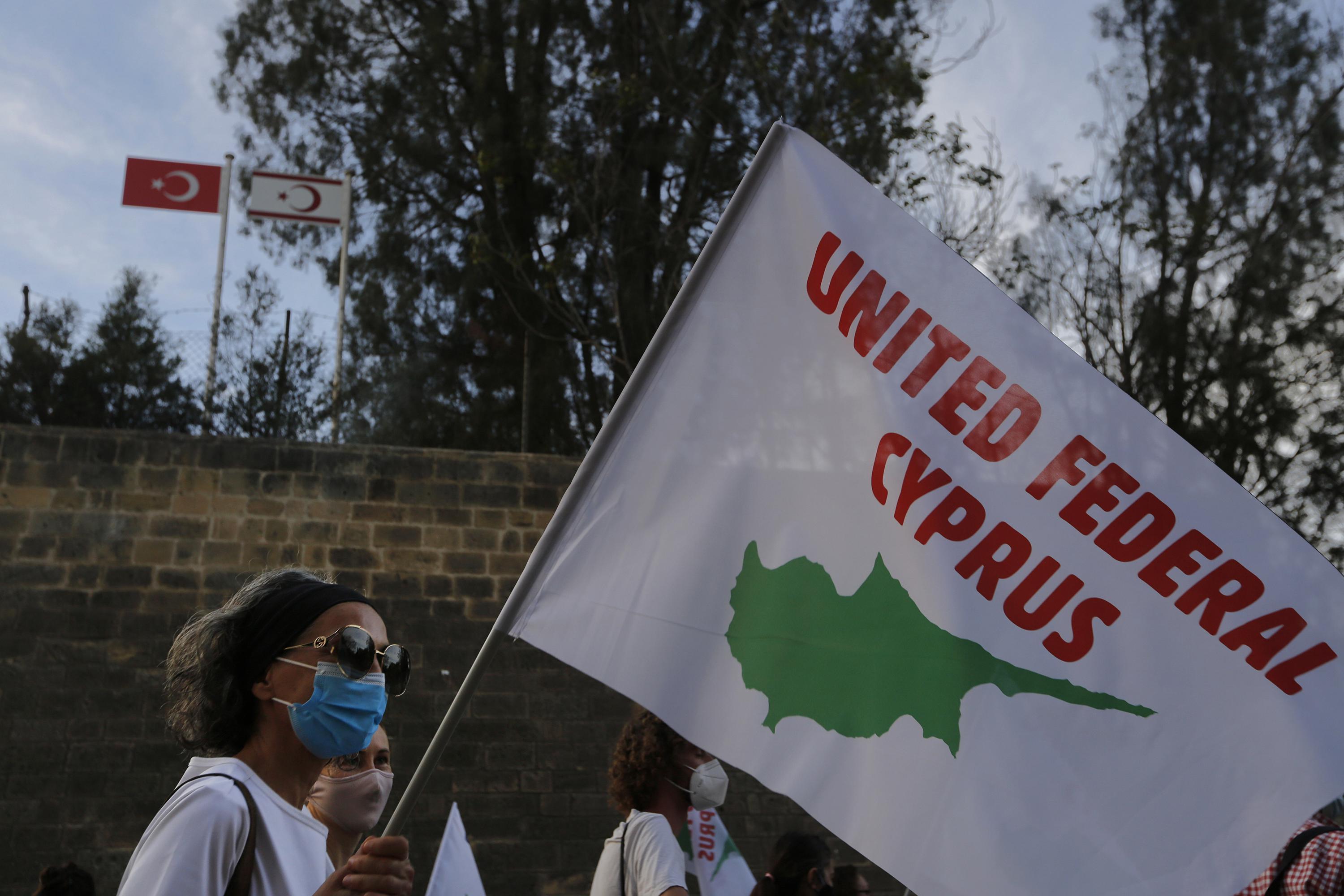
Over 47 years of talks, the ultimate goal endorsed by the U.N. Security Council had been to reunify a breakaway Turkish Cypriot north and an internationally recognized Greek Cypriot south as a federation - two zones running their own affairs with a federal government overseeing the core elements of national governance like foreign policy and defense.

But now Turkey and the new Turkish Cypriot leadership that espouses even tighter bonds with Ankara have changed the rules, dismissing further talks about a federation-based accord as a “waste of time” because nearly five decades of talks on that model have gone nowhere. They’re proposing instead essentially a two-state model that Greek Cypriots say they’d never accept because it would legitimize the country’s partition forever.

WHY NO DEAL FOR SO LONG?

Much of how a federation would work has already been agreed upon, but the nitty-gritty details sank the previous round of talks in 2017.

The minority Turkish Cypriots are upset because they say Greek Cypriots refuse to accept them as 50-50 partners in a federal partnership — what they term “political equality” or equal decision-making powers on all levels of government. Greek Cypriots argue that granting veto powers to a minority defies democratic principles and is without international precedent, could logjam the running of government and potentially allow Turkey to meddle in the island’s internal affairs.

Instead, they propose a formula in which Turkish Cypriots would have a say if any law or government decision infringes on their interests. Despite Turkish and Turkish Cypriot resistance, the Greek Cypriots also want the European Union to take part in formal talks in order to assure any peace deal conforms with EU laws and norms.

SOLDIERS OR NOT?

Turkey insists on keeping a military presence on the island for an indeterminate amount of time as part of a peace accord to ensure that Turkish Cypriots are protected. More than 35,000 Turkish troops have been stationed in the north of Cyprus since 1974 when a Turkish invasion split the country following an Athens junta-backed coup aimed at union with Greece. But Greek Cypriots reject such a military presence because they see it as an existential threat and a serious breach of any country’s sovereignty. Greek Cypriots also say any unilateral military intervention rights in the country’s 1960 constitution must be expunged.

A Cyprus accord would go a long way in helping to ease tensions between Turkey and NATO ally Greece, as well as helping to get Ankara’s troubled bid to join the EU back on track. It could also unlock a wave of new cooperation between regional neighbors to harness the significant gas deposits believed to lie beneath the east Mediterranean seabed.

Turkey doesn’t recognize Cyprus as a state, disputes its rights to already-discovered offshore deposits and is prospecting for hydrocarbons off the island. But Turkey has so far remained the outsider in new, energy-based cooperation pacts that Israel, Egypt, Greece and Jordan have forged with Cyprus.
Article Body Html

NICOSIA, Cyprus (AP) — Normally, trying to get the two sides on ethnically divided Cyprus to sit down for yet another round of talks is preceded by plenty of well-wishing and messages of hope that perhaps this time a peace deal will be worked out.

This week it’s different — quite different. The mood is dour even before the two sides agree to sit down for real talks because they no longer seem to share the same vision of how a final peace deal should take shape.

U.N. chief Antonio Guterres will host an informal gathering of the rival Greek Cypriot and Turkish Cypriot leaders in Geneva as well as the foreign ministers of Cyprus ‘guarantors’ — Greece, Turkey and former colonial ruler Britain. The goal is to get the two sides back on the same page and embarking on a fresh round of formal talks.

Guterres’ spokesman, Stéphane Dujarric, has urged the sides to “come with creativity” to the informal meeting. Here’s a brief explainer of where things stand:

WHY THE CHANGE?

Over 47 years of talks, the ultimate goal endorsed by the U.N. Security Council had been to reunify a breakaway Turkish Cypriot north and an internationally recognized Greek Cypriot south as a federation - two zones running their own affairs with a federal government overseeing the core elements of national governance like foreign policy and defense.

But now Turkey and the new Turkish Cypriot leadership that espouses even tighter bonds with Ankara have changed the rules, dismissing further talks about a federation-based accord as a “waste of time” because nearly five decades of talks on that model have gone nowhere. They’re proposing instead essentially a two-state model that Greek Cypriots say they’d never accept because it would legitimize the country’s partition forever.

WHY NO DEAL FOR SO LONG?

Much of how a federation would work has already been agreed upon, but the nitty-gritty details sank the previous round of talks in 2017.

The minority Turkish Cypriots are upset because they say Greek Cypriots refuse to accept them as 50-50 partners in a federal partnership — what they term “political equality” or equal decision-making powers on all levels of government. Greek Cypriots argue that granting veto powers to a minority defies democratic principles and is without international precedent, could logjam the running of government and potentially allow Turkey to meddle in the island’s internal affairs.

Instead, they propose a formula in which Turkish Cypriots would have a say if any law or government decision infringes on their interests. Despite Turkish and Turkish Cypriot resistance, the Greek Cypriots also want the European Union to take part in formal talks in order to assure any peace deal conforms with EU laws and norms.

SOLDIERS OR NOT?

Turkey insists on keeping a military presence on the island for an indeterminate amount of time as part of a peace accord to ensure that Turkish Cypriots are protected. More than 35,000 Turkish troops have been stationed in the north of Cyprus since 1974 when a Turkish invasion split the country following an Athens junta-backed coup aimed at union with Greece. But Greek Cypriots reject such a military presence because they see it as an existential threat and a serious breach of any country’s sovereignty. Greek Cypriots also say any unilateral military intervention rights in the country’s 1960 constitution must be expunged.

A Cyprus accord would go a long way in helping to ease tensions between Turkey and NATO ally Greece, as well as helping to get Ankara’s troubled bid to join the EU back on track. It could also unlock a wave of new cooperation between regional neighbors to harness the significant gas deposits believed to lie beneath the east Mediterranean seabed.

Turkey doesn’t recognize Cyprus as a state, disputes its rights to already-discovered offshore deposits and is prospecting for hydrocarbons off the island. But Turkey has so far remained the outsider in new, energy-based cooperation pacts that Israel, Egypt, Greece and Jordan have forged with Cyprus.

Canonical URL
https://apnews.com/ddea223af1d45a5b9395b72d3e3f2309
Date Downloaded
2022-09-30T00:00:00Z
URL
https://apnews.com/a43e8b58564a373b14fa638eb20180d3
Headline
Australia signs deal for 25M Moderna doses through next year
Date Published
2021-05-12T23:21:31+00:00
Date Published Raw
2021-05-12T23:21:31Z
Date Modified
2021-05-13T02:30:45+00:00
Date Modified Raw
2021-05-13T02:30:45Z
Authors
    • Name: ROD McGUIRK
    • Name Raw: ROD McGUIRK
Language
en
Breadcrumbs
Main image
Description
CANBERRA, Australia (AP) — Australia has reached a supply agreement for 25 million doses of Moderna COVID-19 vaccines in a deal that the government hopes will ensure all Australian adults have access to inoculation this year...
Article Body
CANBERRA, Australia (AP) —

Australia has reached a supply agreement for 25 million doses of Moderna COVID-19 vaccines in a deal that the government hopes will ensure all Australian adults have access to inoculation this year.

The deal included 10 million doses of the vaccine against the ancestral strain to be delivered in 2021 and 15 million doses of an updated variant booster to be delivered in 2022, U.S.-based Moderna said on Thursday.

The vaccines have yet to be approved by the Australian regulator, the Therapeutic Goods Administration. Pfizer and AstraZeneca are the only coronavirus vaccines approved for use in Australia. All three vaccines require two doses.

Prime Minister Scott Morrison said he expected the first 10 million Moderna vaccines to arrive in Australia in the last three months of 2021.

The 15 million booster doses would deal with possible future variants of the virus, he said.

“We’re now well into the phase of dealing with what’s coming next because the pandemic’s not going anywhere,” Morrison said.

Moderna is in discussions with the government to allow its vaccines to be manufactured in Australia.

Australian-made Moderna shots could be available as early as next year, said Brendan Murphy, chairman of Australia’s Science and Industry Technical Advisory Group on COVID-19.

AstraZeneca is already manufactured in Australia. But Moderna promises to provide quicker inoculation, with three weeks between shots as opposed to three months with AstraZeneca.

Pfizer’s recommended doses are also three weeks apart. But Moderna has an advantage that it does not need to be stored at temperatures as low as Pfizer.

Moderna vaccines would help Australia achieve its aim of inoculating all willing Australian adults within the population of 26 million by the end of the year.

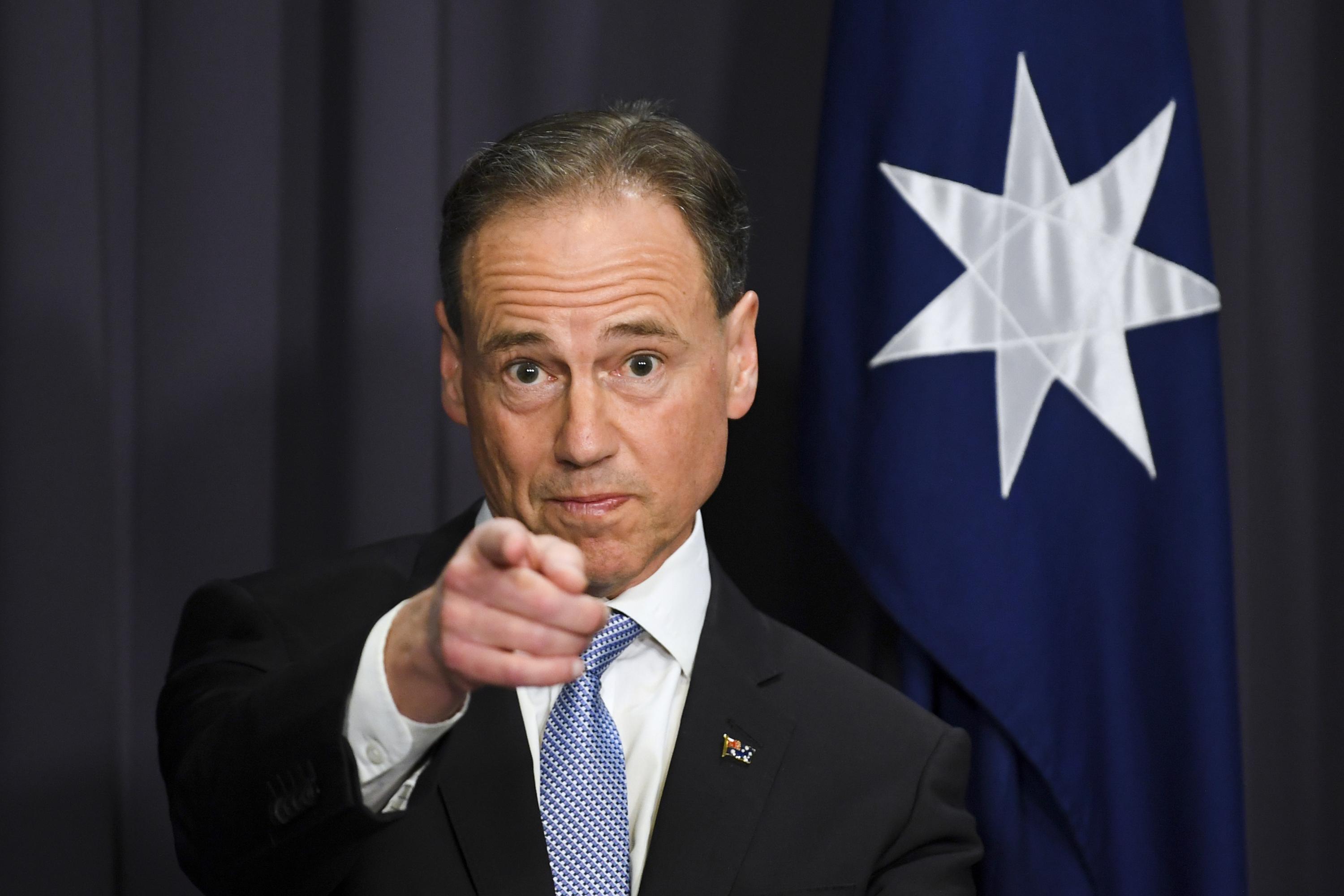
“This locks in our capacity to ensure that every Australian has access to a vaccine this year,” Health Minister Greg Hunt said.

Australia has contracted 20 million imported Pfizer doses, which is the preferred option for adults under 50 years old because of the blood clotting risks associated with the AstraZeneca shot. The government also has deals for 3.8 million imported AstraZeneca doses plus 50 million locally manufactured shots.

The government expects Moderna vaccines would be recommended for Australians under 50.

Hunt said he expects the first of Australia’s order of 51 million doses of the Novavax vaccine will be delivered this year.

Australia’s CSL plant would manufacture the 50 million AstraZeneca doses as planned. Shots that Australia did not need would be donated to neighboring countries, Hunt said.

“We are continuing on with the production because we think if a country can be producing vaccines, the world needs those vaccines if we have more than we need,” Hunt said.

The vaccine rollout began in February, and the government had expected to administer 4 million doses by the end of March. But only 2.8 million doses had been injected by this week, with the government blaming slow shipments for delays.

Australia has been relatively successful in containing the virus. While 910 have died of COVID-19, the government argues the death told would be 30,000 higher if Australia’s fatality rate was the average of Organization for Economic Cooperation and Development countries.
Article Body Html

CANBERRA, Australia (AP) —

Australia has reached a supply agreement for 25 million doses of Moderna COVID-19 vaccines in a deal that the government hopes will ensure all Australian adults have access to inoculation this year.

The deal included 10 million doses of the vaccine against the ancestral strain to be delivered in 2021 and 15 million doses of an updated variant booster to be delivered in 2022, U.S.-based Moderna said on Thursday.

The vaccines have yet to be approved by the Australian regulator, the Therapeutic Goods Administration. Pfizer and AstraZeneca are the only coronavirus vaccines approved for use in Australia. All three vaccines require two doses.

Prime Minister Scott Morrison said he expected the first 10 million Moderna vaccines to arrive in Australia in the last three months of 2021.

The 15 million booster doses would deal with possible future variants of the virus, he said.

“We’re now well into the phase of dealing with what’s coming next because the pandemic’s not going anywhere,” Morrison said.

Moderna is in discussions with the government to allow its vaccines to be manufactured in Australia.

Australian-made Moderna shots could be available as early as next year, said Brendan Murphy, chairman of Australia’s Science and Industry Technical Advisory Group on COVID-19.

AstraZeneca is already manufactured in Australia. But Moderna promises to provide quicker inoculation, with three weeks between shots as opposed to three months with AstraZeneca.

Pfizer’s recommended doses are also three weeks apart. But Moderna has an advantage that it does not need to be stored at temperatures as low as Pfizer.

Moderna vaccines would help Australia achieve its aim of inoculating all willing Australian adults within the population of 26 million by the end of the year.

“This locks in our capacity to ensure that every Australian has access to a vaccine this year,” Health Minister Greg Hunt said.

Australia has contracted 20 million imported Pfizer doses, which is the preferred option for adults under 50 years old because of the blood clotting risks associated with the AstraZeneca shot. The government also has deals for 3.8 million imported AstraZeneca doses plus 50 million locally manufactured shots.

The government expects Moderna vaccines would be recommended for Australians under 50.

Hunt said he expects the first of Australia’s order of 51 million doses of the Novavax vaccine will be delivered this year.

Australia’s CSL plant would manufacture the 50 million AstraZeneca doses as planned. Shots that Australia did not need would be donated to neighboring countries, Hunt said.

“We are continuing on with the production because we think if a country can be producing vaccines, the world needs those vaccines if we have more than we need,” Hunt said.

The vaccine rollout began in February, and the government had expected to administer 4 million doses by the end of March. But only 2.8 million doses had been injected by this week, with the government blaming slow shipments for delays.

Australia has been relatively successful in containing the virus. While 910 have died of COVID-19, the government argues the death told would be 30,000 higher if Australia’s fatality rate was the average of Organization for Economic Cooperation and Development countries.

Canonical URL
https://apnews.com/a43e8b58564a373b14fa638eb20180d3